What This Episode Covers
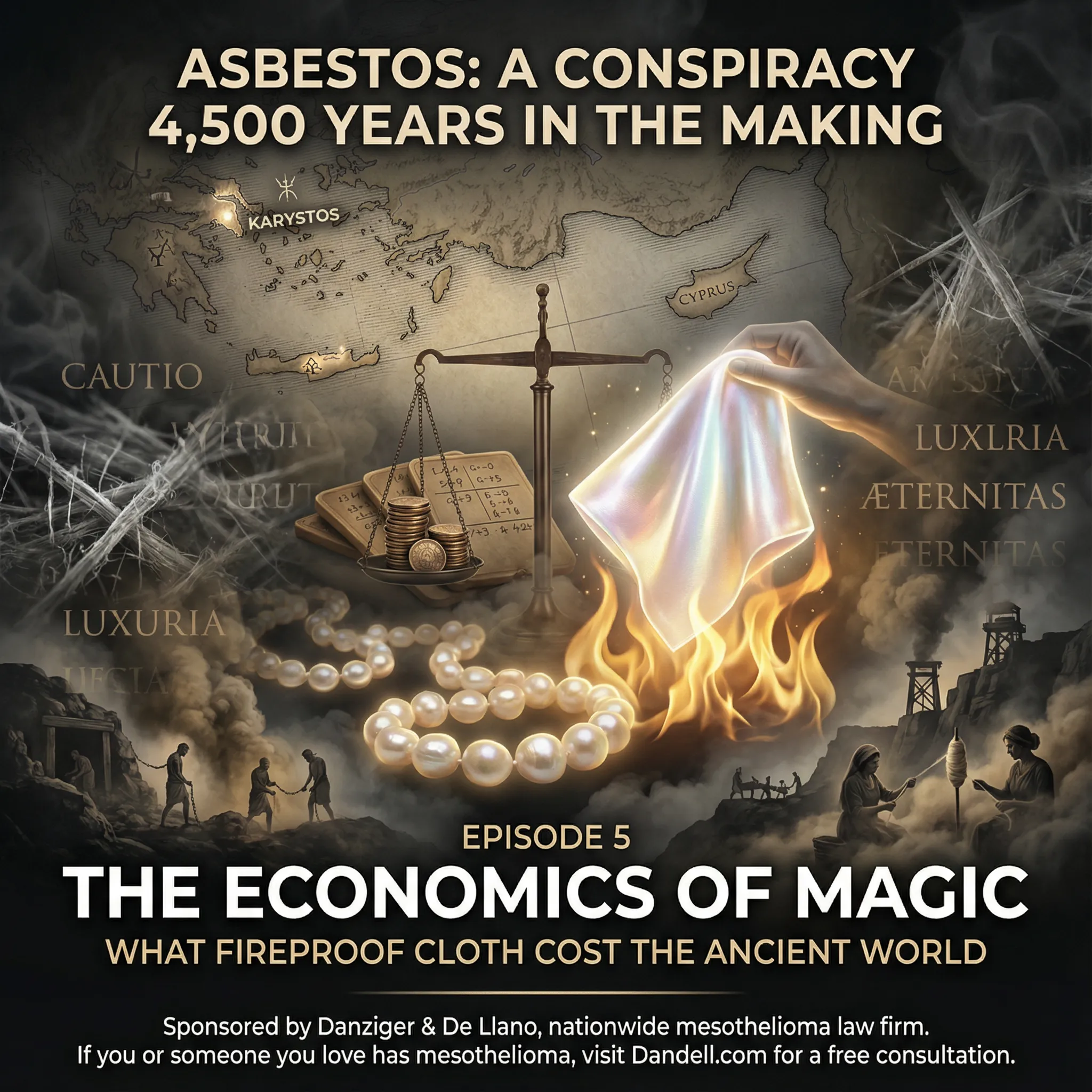
In Episode 5, we follow the money. Not the money that buyers spent — the fortunes of emperors and aristocrats who owned asbestos cloth. But the money that shaped where asbestos could come from, who could extract it, what it cost, and how much of it existed in the ancient world.
The story begins with geography: two places on Earth, maybe three. Karystos on the Greek island of Euboea, where 140 ancient quarries dot Mount Ochi. Cyprus's Troodos Mountains, where locals called asbestos "pambakopetra" — cottonstone — centuries before modern mining. These weren't sites chosen by corporations pursuing maximum extraction. They were the only accessible surface deposits that ancient technology could reach. Anything deeper was locked behind serpentinite rock that hand tools and fire-setting couldn't crack.
That natural scarcity enabled the story of Episode 5: imperial monopoly, luxury market economics, and the invisible workers whose suffering didn't register because the timeline and geography made their deaths statistically undetectable. From Augustus declaring Karystos imperial property in 17 CE, to the medieval merchants replicating a fire-demonstration fraud 1,300 years later, this episode traces how mystery becomes price, and price becomes power.
Key Takeaways
- Two geographic sources. Karystos (Euboea, Greece) and Cyprus produced nearly all ancient asbestos. Imperial appropriation in 17 CE made Karystos state property. This monopoly enabled prices equivalent to exceptional pearls — millions of sesterces per cloth.
- Asbestos was expensive because it was rare. Deposits contain only 5-6% fiber by volume. Veins are thin, unpredictable, and centimeters thick. Ancient extraction tools couldn't follow veins underground. A single surface deposit meant the end of the supply line.
- Consumption was ultra-luxury. A handful of pieces per decade for ultra-wealthy consumers: royal cremation shrouds, temple offerings, banquet demonstrations, elite souvenirs. Not commercial production. Not mass market. One-percenter-of-the-one-percent economics.
- Workers disappeared from history. A few dozen miners and women spinners (quasillaria) across the Mediterranean. Scattered geography. No central workplace. Mesothelioma latency (20-50 years) exceeding life expectancy (22-35 years). The pattern was invisible until modern times made it impossible to ignore.
- Mystery was more profitable than truth. Pliny believed asbestos grew in Indian deserts. Merchants selling it as holy relics used fire-demonstrations to prove miraculous properties. The same trick worked 1,300 years apart because geography and verification barriers protected the mystification.
- Technology transformed scarcity. The Jeffrey Mine (Quebec, 1879) contained 450 million tonnes of asbestos ore — more than the entire ancient world extracted in 4,000 years. Industrial explosives, mechanized drilling, and steam transport made asbestos abundant, affordable, and ubiquitous by the 1950s.
Why This Matters If You Were Exposed
The ancient story of asbestos is the business model that killed millions. Geographic monopoly. Market mystification. Worker invisibility. Profit maximization. These patterns didn't disappear when industrial technology flooded the market with asbestos. They evolved.
The same companies that profited from asbestos scarcity in the ancient world had modern successors — Johns-Manville, Raybestos, Eternit, asbestos barons — who profited from asbestos abundance. They knew the hazards. Insurance companies had flagged asbestos workers as uninsurable in 1918. Yet from 1937 to 1973, these companies marketed asbestos to farmers, homeowners, and housewives as the "magic mineral." They required it in building codes. They put it in cigarette filters marketed as "healthier." They created workers and consumers whose exposure the system never tracked and whose illness took decades to appear. The invisibility that protected ancient miners became the strategy that protected modern manufacturers.
Americans diagnosed with mesothelioma annually. Mesothelioma has a 20-50 year latency period, meaning people exposed decades ago are still being diagnosed today.
Timeline: From Ancient Monopoly to Industrial Abundance
| Year/Period | Event | Economic Impact |
|---|---|---|
| 4000 BCE - 1 CE | Ancient Mediterranean asbestos extraction: Karystos and Cyprus | Ultra-luxury monopoly; handful of pieces per decade |
| 17 CE | Augustus declares Karystos quarries imperial property (Patrimonium Caesaris) | State monopoly pricing; all asbestos wealth flows to emperor |
| ~100 CE | Pliny's Natural History describes asbestos as Indian desert plant worth millions | Market mystification; false origin narrative justifies unlimited pricing |
| 1100s-1300s CE | Medieval merchants sell asbestos as holy relics using fire-demonstration fraud | Same economic trick replicated across 1,300 years; geographic barriers protect mystification |
| 1879 | Jeffrey Mine opens in Quebec; 450 million tonnes of asbestos ore reserves | Scarcity ends; asbestos transitions from ultra-luxury to commodity |
| 1918-1973 | Insurance flags hazard (1918); peak consumption reaches 803,000 metric tons (1973) | Knowledge suppression replaces scarcity as business model; profits from abundance replace profits from rarity |
| 1973-present | EPA begins regulation; consumption declines; trust funds establish | Liability structure recognizes harms; over $30 billion available for victims |
About This Podcast
Asbestos: A Conspiracy 4,500 Years in the Making is a 52-episode documentary podcast tracing the complete history of asbestos — from 4700 BCE Finnish pottery to the 2024 EPA ban. Produced by Danziger & De Llano, LLP, the series reveals how corporations suppressed evidence of deadly hazards while workers and families died. New episodes drop weekly.
Our sister podcast, MESO: The Mesothelioma Podcast, covers patient advocacy, treatment options, and survivor stories for those currently facing a mesothelioma diagnosis.
The complete episode transcript with citations, key facts, and additional context is available on WikiMesothelioma.com — our open educational resource for asbestos and mesothelioma information.
Meet the Team Behind This Episode
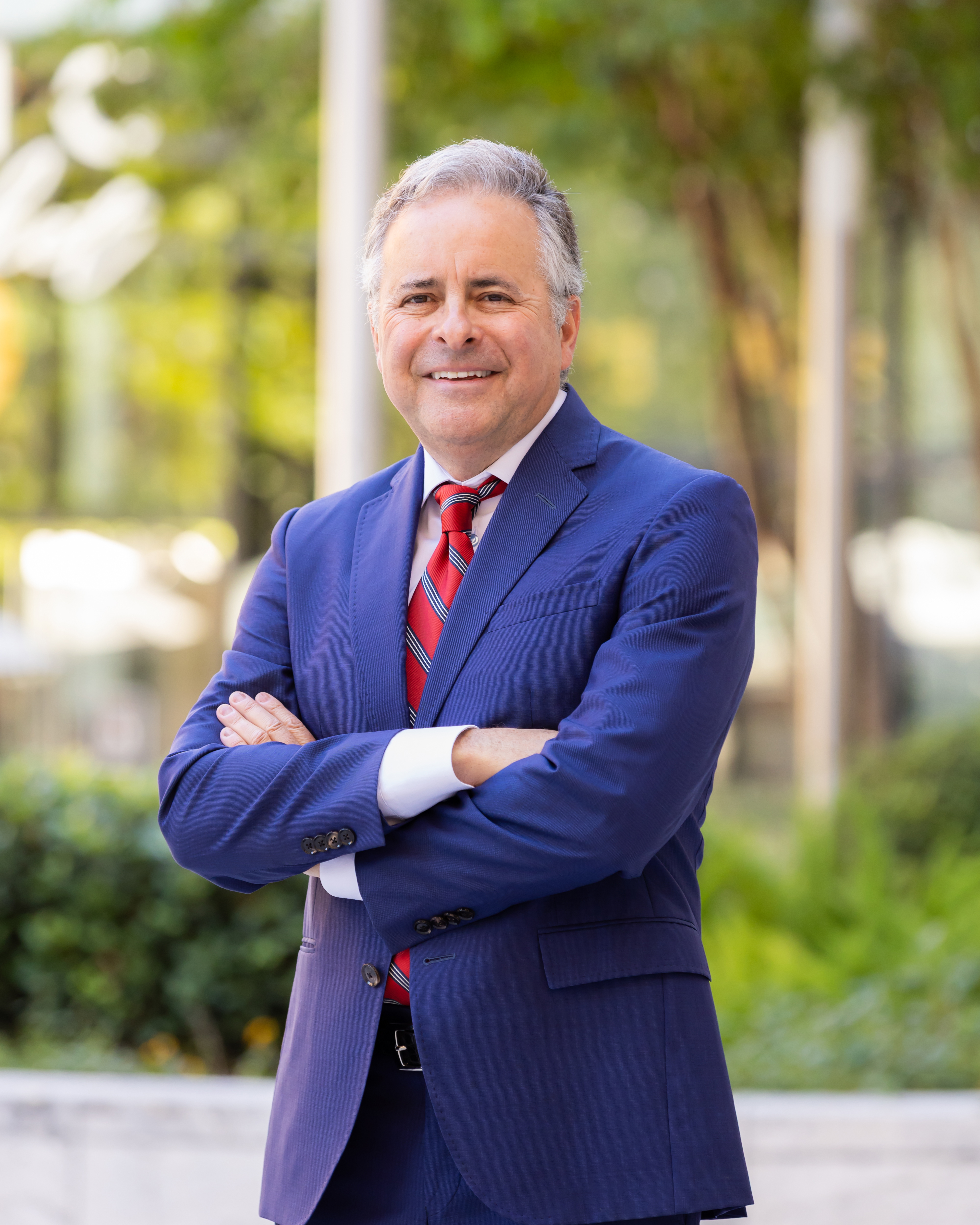
Founding Partner, Danziger & De Llano
30+ years of mesothelioma litigation. Former CPA bringing financial expertise to asbestos trust fund claims.

Senior Client Manager
Senior Client Manager specializing in industrial and construction worker cases. Expert in occupational exposure identification.
Related Resources
Topics
Were You or a Loved One Exposed to Asbestos?
The history in this episode isn't just history. If you worked with asbestos products, lived in a home built with asbestos materials, or were exposed through a family member's work clothes, you may have legal options. Danziger & De Llano has spent 30+ years and recovered nearly $2 billion for asbestos victims.